Source metal coil factory uncoiler for Automotive, Electronics, and Home Appliance Lines
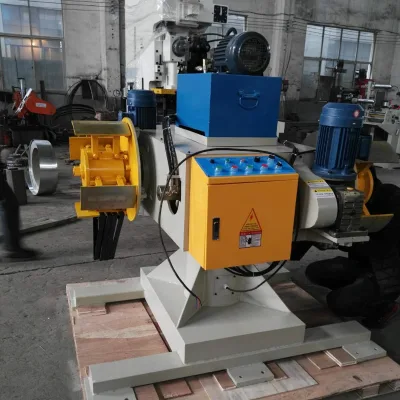
Find and compare 30 metal coil factory uncoiler options ranging from 3-ton to 20-ton capacities. Evaluate specifications such as hydraulic power, coil width, and automatic grade to select the right decoiler for your sheet processing needs.
Key considerations
Products List


Comprehensive Sourcing Guide
Metal Coil Factory Uncoiler Sourcing Guide
Selecting the right uncoiler, often referred to as a decoiler or pay-off reel, is a critical step in establishing or optimizing a metal processing line. This equipment serves as the entry point for coil stock, feeding material into downstream machinery such as roll formers, stamping presses, or shear machines. The primary function is to hold the coil securely while providing controlled tension and smooth unwinding, ensuring that the metal sheet or strip enters the production process without deformation, scratches, or tension-induced defects. For buyers in the automotive parts, electronics, and home appliance industries, the reliability of this initial stage directly impacts the quality of the final product and the overall efficiency of the manufacturing line.
The market for these machines is diverse, ranging from small, manual units to large, fully automatic hydraulic systems. Buyers must navigate a wide spectrum of capabilities, observing that listed prices can vary significantly based on capacity, automation level, and specific technical configurations. Understanding the distinction between simple mechanical uncoilers and complex hydraulic or servo-driven systems is essential. The decision often hinges on the weight and width of the coils being processed, the required working speed, and the level of integration needed with existing factory infrastructure. This guide provides a structured approach to evaluating these variables, ensuring that procurement decisions are grounded in verified technical data and commercial reality.
Product Scope and Observed Listing Signals
The observed market data indicates a broad range of product offerings, with prices spanning from approximately $50 to $150,000 USD. This wide variance reflects the difference between basic, low-capacity units and high-end, heavy-duty hydraulic systems designed for industrial-scale operations. Minimum Order Quantities (MOQ) are typically low, ranging from 1 to 5 units, suggesting that these machines are often treated as capital equipment rather than high-volume consumables. Buyers should note that while some listings may appear inexpensive, they often correspond to smaller capacity models or basic configurations, whereas high-capacity units with advanced control systems command premium pricing.
Product attributes reveal a strong trend toward automation and customization. Many listed units are described as "Automatic" with "Inverter Control Speed," indicating a move away from manual operation toward precise, programmable tension control. The observed models include specific designations such as "TEC-KEY uncoiler" and capacities ranging from 3 tons to 20 tons. Furthermore, the "Large Deformation" principle mentioned in some attributes suggests specialized applications where significant material shaping or stress relief is required during the uncoiling process. Buyers should carefully match these observed specifications to their actual production needs, as a mismatch in capacity or automation level can lead to operational bottlenecks or unnecessary capital expenditure.
Technical Specifications to Verify
When evaluating technical specifications, the inner diameter (ID) and outer diameter (OD) of the coil are paramount. Observed data shows ID ranges typically between 470mm and 610mm, with common standards around 480-520mm. It is crucial to verify that the uncoiler’s mandrel or expansion type matches the specific coil cores used in your supply chain. Similarly, the maximum outer diameter, observed up to 1900mm in some high-capacity models, must accommodate the largest coils you intend to process. Failure to align these dimensions can result in the inability to load coils or damage to the machine during operation.
Capacity and power requirements are equally critical factors. Listings indicate capacities ranging from 3 tons to 20 tons, with some models supporting up to 15-20 tons. Buyers must ensure the uncoiler’s load-bearing capacity exceeds the maximum weight of the coils they plan to use, including a safety margin. Power specifications also vary, with main motor powers observed from 3kW to 7.5kW and hydraulic powers up to 5.5kW. The working speed, observed at 30m/min to 75m/min, must be compatible with the downstream machinery’s throughput requirements. Additionally, the coil width, ranging from 500mm to 1250mm, must be supported by the uncoiler’s arbor and side plates to prevent lateral movement during unwinding.
Compliance and Safety Documentation
Certification and safety standards are non-negotiable for industrial machinery. Observed listings frequently mention CE and ISO certifications, which are essential for ensuring that the equipment meets European and international safety and quality benchmarks. Buyers should request valid certification documents and verify their authenticity, as these certifications often indicate adherence to specific electrical and mechanical safety protocols. The presence of SGS certification in some listings further suggests third-party verification of quality and performance, providing an additional layer of assurance for the buyer.
Beyond formal certifications, the physical safety features of the uncoiler must be scrutinized. Hydraulic systems, which are common in higher-capacity models, require robust containment and leak prevention measures. The control system, often described as "Inverter Control Speed," should include emergency stop functions and overload protection. Buyers should verify that the machine’s electrical components are properly grounded and that all moving parts are adequately guarded. Documentation should also include detailed operation and maintenance manuals, which are vital for training staff and ensuring long-term safe operation.
Cost Drivers and Commercial Terms
The cost of a metal coil uncoiler is driven by several key factors, including capacity, automation level, and material construction. Higher capacity models, such as those supporting 15-20 tons, naturally cost more due to the increased size and strength of the structural components. Automation features, such as servo-driven expansion and inverter-controlled speed, add to the cost but offer greater precision and ease of use. Buyers should also consider the type of packing, which ranges from "Wood Case" to "Sea Packing," as this can impact shipping costs and the risk of damage during transit.
Commercial terms, including warranty and customization options, play a significant role in the total cost of ownership. Observed listings often include a 12-month warranty, which is a standard expectation for industrial machinery. Buyers should clarify the scope of this warranty, including what components are covered and the response time for service requests. Customization is frequently available, allowing buyers to tailor the machine to specific coil dimensions or factory layouts. However, customized orders may have longer lead times and higher costs, so buyers should balance their specific needs against budget and timeline constraints.
Supplier Qualification and Quality Control
Supplier qualification is a critical step in mitigating procurement risk. Buyers should verify the supplier’s manufacturing capabilities, particularly their experience in producing uncoilers for the automotive, electronics, or home appliance industries. The observed origin of many units is Jiangsu, China, a region known for its industrial manufacturing base. Buyers should request evidence of past projects, including references or case studies, to assess the supplier’s reliability and quality consistency. It is also important to verify the supplier’s ability to provide after-sales support, including spare parts availability and technical assistance.
Quality control processes should be clearly defined and agreed upon before production begins. Buyers should inquire about the testing procedures used to verify the uncoiler’s performance, including load tests, speed accuracy checks, and hydraulic system integrity tests. Requesting a factory audit or third-party inspection report can provide additional assurance of quality. Additionally, buyers should ensure that the supplier provides a detailed bill of materials (BOM) and component specifications, allowing for verification of the quality of key parts such as motors, hydraulic pumps, and control systems.
Long-Term Procurement Checks
Long-term procurement success depends on the machine’s durability and the supplier’s ability to support it over time. Buyers should consider the maintenance requirements of the uncoiler, including the frequency of hydraulic fluid changes, lubrication schedules, and electrical component inspections. Models with automatic features may require more specialized maintenance, so buyers should ensure they have access to trained technicians or comprehensive training programs. The availability of spare parts, such as seals, motors, and control modules, is crucial for minimizing downtime.
Furthermore, buyers should evaluate the potential for future upgrades or modifications. As production needs evolve, the uncoiler may need to accommodate different coil sizes or integrate with new downstream equipment. Suppliers that offer modular designs or upgrade paths can provide greater flexibility and protect the initial investment. Regular performance reviews and preventive maintenance schedules should be established to ensure the uncoiler continues to operate efficiently and safely throughout its lifecycle. By focusing on these long-term factors, buyers can ensure a sustainable and cost-effective procurement strategy.
FAQs
What is the maximum coil weight capacity for these uncoilers?
The maximum coil weight capacity varies by model, ranging from 3 tons to 15 tons. Specific models support up to 15,000 kg, while others handle 3 to 20 tons. Buyers should select the model that matches their specific material weight requirements to ensure safe and efficient operation during the straightening process.
Can the metal coil factory uncoiler be customized for specific needs?
Yes, customization is available for these machines. The product attributes indicate that customized options are offered to meet specific production requirements. This allows buyers to tailor the equipment to their unique operational workflows, ensuring better integration with existing stamping presses or roll forming machines in their facility.
What is the working speed of the hydraulic decoiler?
The working speed depends on the specific model selected. One model operates at 75 meters per minute, while another runs at 30 meters per minute. These speeds are controlled via an inverter control system, allowing for precise adjustments to match the production line's pace and material handling needs effectively.
What certifications do these uncoilers hold?
These machines hold CE and ISOCCC certifications. Some models also carry SGS certification. These certifications indicate compliance with specific safety and quality standards, providing buyers with assurance regarding the manufacturing quality and operational safety of the equipment when deployed in industrial environments for automotive or electronics parts production.
What is the warranty period for the straightening machine?
The warranty period is 12 months. This coverage applies to the new condition machines supplied. Buyers should verify the specific warranty terms with the supplier to ensure all components, including the hydraulic system and automatic grade features, are protected during the initial year of operation in their manufacturing facility.
What is the inner diameter range for the coil mandrel?
The inner diameter range varies by model, typically spanning from 470mm to 610mm. Specific models support ranges like 480-520mm or 480-610mm. This flexibility allows the uncoiler to accommodate different coil specifications, ensuring a secure fit for various metal sheet materials used in home appliance or automotive parts manufacturing.